
Cohort 1 launches in --d --h --m --s
S01Problem
S02Validate
S03Build
S04Price
S05Users
S06Next Steps
Mon 3 Aug · 6pm BST
S01
Weeks 1–2
Problem Person looking for a problem

Find a problem worth validating

The sequence starts with an audience, not an idea. Before you name a product, brand a domain, or write a line of code — you find evidence that a specific group of people has a specific complaint they'd pay to make go away.

Start with who, not what
The narrower the audience, the easier every decision becomes — from copy to channels to pricing
You are not trying to help everyone. You are trying to find the group with the sharpest version of one problem.
If your product is similar to a funded competitor, the only real difference is resources — and they have more. Differentiation starts with audience specificity.
Where real complaints live
People complain differently online than on a call — the right communities surface raw frustration in ways a customer interview rarely will
There are search patterns that find unmet demand directly — we walk through them live using Reddit, forums, and niche communities
Trend tools show what people are searching for before a category has fully formed — useful for finding surface area, not for replacing primary research
There is a personal method for surfacing your own best problem — structured, short, and surprisingly effective
Your domain and brand name
The name should signal the job — what it does, not what it is
Short, say-able, and available in your category's expected TLD
Core tools
Reddit search Google Trends Claude / ChatGPT
Hot seat format
Each founder presents their problem statement in 3 minutes. The room stress-tests it: is this a complaint or a real problem? Travis tears down one example live — reframes the audience, sharpens the promise, finds the differentiation angle.
Gate — before Session 2
You can name one specific audience, one specific complaint, and show evidence it exists in the wild — in the words of real people, not your paraphrase of them.
Mon 17 Aug · 6pm BST
S02
Weeks 3–4
Validation Schematics — defining the solution and validating demand

Turn demand into a landing page

Compliments are weak evidence. Time, money, and repeated pain are stronger. The job of this session is to get someone to act before you build — a payment, a booked call, a pre-order, or a direct request to use the product.
Writing the problem/solution in one sentence
There is a single-sentence structure that forces clarity — if you can fill it in, you are ready to build a page around it
If you cannot say it in one sentence, you do not understand it well enough to build it
Live copy teardown: headline, subhead, CTA — do they all say the same thing?
The pre-launch landing page
The landing page is the MVP — it describes the product before the product exists
The page has three jobs: clarity, credibility, and a single action
There is a hard time limit on building this — we will show you how to hit it
Payment collection goes live before the product does
What counts as real demand
Payment is the strongest signal. Everything else needs interpretation.
A booked call, a detailed reply, or a direct request to use the product are strong signals — we rank the full list so you know what you actually have
A generic email signup from a stranger is weak — do not mistake it for demand
"I love this idea" from a friend is not a signal — they are being kind, not honest
The manual MVP — pretend it is software
If you can do the job manually, you can validate it before writing a line of code
Charge anyway. Even a small amount. Learn what "good" looks like before you automate it.
Then automate what you have already proven people will pay for
Core tools
Carrd or Framer Stripe or Lemon Squeezy Claude Gumroad Tally
Hot seat format
Travis rewrites one founder's landing page headline and CTA live using AI tools. The room reviews each founder's demand signal — payment vs signup vs compliment — and calls out what is real and what is not.
Gate — before Session 3
You have a live landing page and at least 3 demand signals from people outside your immediate circle. Strong signals include payment, booked calls, detailed replies, pre-orders, or a direct request to use the product.
Mon 1 Sep · 6pm BST
S03
Weeks 5–6
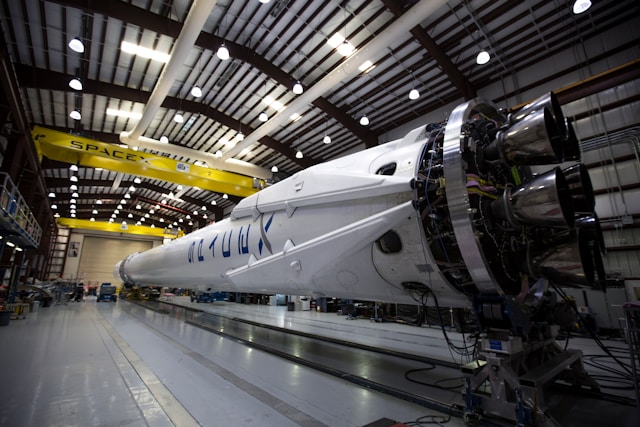
Product Rocket in hangar — build time

Build only what the landing page promised

AI removed the build barrier. The constraint now is scope discipline. The landing page is the spec. Build exactly that — nothing more. If you cannot deliver value in the first 5 minutes of someone using it, no amount of extra features will save you.

Skip these entirely
User roles and permission systems
Admin dashboards
Teams and collaboration features
Complex onboarding flows
Referral and affiliate systems
Advanced settings and customisation
Mobile apps at launch
Full billing logic and invoice management
Custom analytics dashboards
Build only this
One core workflow — the thing your landing page described
One user type — the specific person from Session 1
One input and one output
One success moment — the first time it works for a stranger
One payment or access path
One feedback channel — the simplest possible way to hear what is broken
AI-assisted build — the 2026 stack
You will use a deliberately small tool stack: Visily for screens, Lovable for the build, and Claude Code for control
The workflow matters more than which tool you use — we build live so you see the process, not just the output
Done beats perfect. Shipped beats planned. A live ugly product beats a polished Figma file.
Visual identity — 90 minutes, not 90 days
One typeface decision signals your entire category — done in minutes, not days
You do not need a brand system at this stage. Something that is not embarrassing is enough.
Core tools
Visily Lovable Claude Code Domain registrar
Hot seat format
Travis builds a feature live with an AI tool in real time. Each founder presents their MVP scope — the room cuts it down. One founder gets a live design review: does the brand match the audience?
Gate — before Session 4
A stranger can understand what it does, use the core feature, and reach the first value moment without your help. Under 5 minutes.
Mon 15 Sep · 6pm BST
S04
Weeks 7–8
Pricing Rocket lifting off

Price it before you promote it

Most side-project founders underprice and hide behind free access. This session sets your pricing before you go find users — because the price you charge signals who it is for, and the wrong price attracts the wrong people.

Pricing principles
Free is usually a mistake at this stage — it attracts the wrong feedback and delays reality
Find your floor. It will be higher than you are comfortable with.
There are three entry patterns that work at this stage — monthly, annual, and lifetime — each signals something different to the buyer
If freemium is your distribution model it can work — but only if free users actively promote you to paying ones
Your tier structure
Monthly for flexibility. Annual for cashflow. Lifetime for early adoption.
Annual pricing reduces churn — always offer it alongside monthly
Lifetime deals have a right timing and a wrong timing — we cover both so you do not run one too early or too late
Early retention signals
Users come back without you asking — that is the clearest early signal you have
Churn tells you more than growth at this stage — watch it before you watch anything else
A user who complains when it goes down is more attached than one who just quietly stops using it
Core tools
Stripe Lemon Squeezy PostHog Tally
Hot seat format
Founders present their pricing page — the room critiques positioning and price anchoring. Travis rewrites one pricing page live using real market comparables. Every founder leaves with pricing set and payment connected.
Gate — before Session 5
You have a live pricing page with a working payment link. Your tier structure is decided and your payment processor is connected before outreach begins.
Mon 29 Sep · 6pm BST
S05
Weeks 9–10
Traction Astronaut spacewalk

Find your first real users

Pricing is set. Now find the people who will pay it. The first users are always manual — that is expected. The target is 10 serious prospects and 3 paid conversions. This session helps you identify where they are and what actually moves them.

Product quality before volume
Onboarding, performance, and time-to-first-value matter more than any channel at this stage
If outreach creates attention but usage does not stick, the product needs work
If nobody sees it at all, you have a distribution problem — learn which one you have before you decide what to fix
Where to find your first users
Go back to the communities where you found the original complaint — post the solution where the problem lives
Some communities convert better than others for early paid users — we map the ones worth your time
The difference between a DM that converts and one that gets ignored is in the framing — we cover it live
Some channels are spikes, not systems — we cover which is which and when each is worth the effort
The lifetime deal as a first-user mechanism
A lifetime deal can be your fastest route to real users and real cash — if you structure it right
Running an LTD early is also a validation mechanism — one that is more honest than most
There is a right size for an early LTD — uncapped is almost always wrong
Test channels, then commit to one
At the start, test multiple channels briefly and deliberately — there is a structured way to do this without spreading thin
Then pick the highest-signal channel and focus on it entirely. Ignore the rest.
Being average everywhere is worse than being great somewhere
Core tools
Reddit X / LinkedIn DMs Product Hunt Indie Hackers Beehiiv / Substack
Hot seat format
Each founder shares their first user plan and current traction. Travis reviews one outreach sequence live. The room identifies the highest-leverage channel for each founder's specific audience.
Gate — before Session 6
You have made a focused push for your first paid users, with at least 10 serious prospects contacted and a clear record of what converted, what stalled, and what needs fixing. The strongest outcome is 3 paying users from outside your immediate circle.
Mon 13 Oct · 6pm BST
S06
Weeks 11–12
Next Steps Moon surface

Keep it running and choose the next move

By the final session, you have something live. Now the job is to keep it simple, useful, and manageable. You may keep the product, improve it, grow it, or eventually sell it. Either way, the same foundations matter: clear numbers, simple support, fewer moving parts, and a product someone else could understand.

Make it manageable
Set up error alerting, a support channel, a status page, and a simple renewal flow. These reduce manual work once they are in place.
Three or four numbers tell you if the business is healthy: MRR, churn, active users, and time-to-first-value. The rest is noise.
Automate boring work in small, observable steps — keep it visible so it does not fail silently
Good ops is invisible. Bad ops becomes your full-time job.
Where to spend your time
Most actions feel productive but are low leverage — the high-leverage ones are fewer and less comfortable
Shorter feedback loops compound faster than any feature
Delete low-leverage work weekly so you can do more of the work that actually moves things
Exit paths — optional literacy
Marketplace listings give you access to the widest buyer pool — we cover what a clean listing looks like and what multiples to expect
Targeted outreach to a shortlist of buyers is faster for the right product
Buyers have a short checklist — knowing it now means you can build cleanly toward it even if you never plan to sell
Core tools
Zapier / Make / Pabbly Acquire.com Flippa
Hot seat format
Each founder maps their biggest time sink and builds an automation plan. Travis shares a real operations setup and runs one live. Founders who are ready pitch their exit profile to the room — everyone else maps what to build next.
Programme outcome
By the end of the programme, you should have a live product, real demand signals, a pricing page, a route to first paying users, and a simple operating checklist. You will also know what to do next: keep improving it, grow it slowly, use it as the base for another product, or prepare it for sale.

Twelve weeks. Eight seats. Starts 3 August 2026.

Apply for a seat